Saturday, July 15, 2006

Basilica. The Splendor and the Scandal: Building St. Peter's
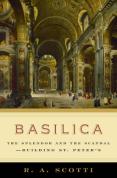

After his election to the Papal throne in 1503, Pope Julius II made a radical decision. He decided to tear down and to rebuild the 1200 year old basilica that stood atop the grave of St. Peter in Rome. Julius ordered his favored architect, Bramante, to design a glorious new church, one which would e a reflection of the Rome's power as the center of the Christian church, and one which would be large enough and grand enough to rival the ancient ruins that littered the city of Rome.

The ambitious project proceeded rapidly. In April of 1506, an elderly but fiesty Julius climbed into the foundation trench of the projected church and deposited there his own medallions - testimony to his role as instigator of the supersized project. Little did Julius know that it would be a century and a half before new St. Peter's was completed, and that in the meantime, the problem of funding the Basilica would provoke the Protestant Reformation, threatening the power of the Roman Church.

In a book that reads like a nonfiction novel, R.A. Scotti recounts this longest of building projects. On the pages of Basilica, historical characters, from Bramante to Bernini and from Pope Julius II to Pope Alexander VII spring to life. The excitement of the new project, the scandalous amount of money spent on the church, and the complications faced by its engineers are but a few of the sub-themes that run throughout the pages of this fascinating work.

Labels: , , ,

Thursday, February 09, 2006

Hadrian's Empire

Though at first glance this book seems as if it would provide history and analysis of Rome’s great emperor, Hadrian, that’s not the case at all. Rather, Danny Danzinger and Nicholas Purcell have teamed up to produce a book that provides a broad overview of the Roman Empire in the second century AD, under the rule of Hadrian.

Though Hadrian himself does receive a signficiant amount of attention in the book, the authors of Hadrian's Empire most often use aspects of Hadrian's life as stepping-off points for the exploration of broader themes. Thus, there are chapters that cover topics such as the workings of the Roman city, the administration of the Roman Empire, the military, politics, religion, social life, attitudes towards sex, houses and apartments, food, clothing, class differences, and women's role in society.

If you're the kind of person who spends your time in the Roman Forum wishing you knew more about how Romans lived, worked, and played, then this book will satisfy some of your longings, for it will leave you with a much-expanded idea of what life was like in the ancient Roman world.

Labels: , ,

The Colosseum

In the year 1999, the movie Gladiator reminded millions of people just how spectacular a place Rome’s Colosseum is. It had been decades since the last swords and sandals flick, but Russell Crowe, in the role of a fictional gladiator, Maximus, dramatically won our hearts.

Yet, one wonders. Did it really happen that way? Did the movie provide an accurate portrayal of the gladiatorial games? And was its computer-generated rendition of the Colosseum worth the time (and money) it took to produce it? Now you can judge for yourself.

Classical scholars Keith Hopkins and Mary Beard have just published a pocket-sized history of the Colosseum and the spectacles it hosted. This is a book that shouldn’t be missed by anyone who has found themselves standing in the Colosseum and trying to imagine what it was like to attend the gladiatorial games. Nor should the book be overlooked by those who have shivered with horror when thinking of the carnage and violence that took place in the largest amphitheater in the Roman world.

Beard and Hopkins write for a general audience and their book addresses many aspects of the gladiatorial games and the Colosseum itself. They have chapters that examine the staging of the games, the building of the Colosseum, the careers of gladiators, the social rituals of which the gladiatorial games were a part, and the uncanny attraction that generations of travelers have had to this monument.

Far from dry, this book is an enjoyable and quick read - the perfect length for the plane ride to Rome. “We who are about to die, salute this lovely little book!”

Labels: , ,

Tuesday, November 22, 2005

The Families Who Made Rome

Anthony Majanlahti’s book, The Families Who Made Rome: A History and a Guide is simultaneously a social history of Rome’s most noble families and a guidebook that allows you to see Rome in a whole new way. If you’ve ever wandered from Palazzo Barberini to Piazza Colonna or from the Villa Borghese to the Palazzo Medici and wondered who built all these grand palaces, piazzas, and gardens, then this book is for you!

The book begins with an introduction to the “Broken City,” the Rome created by the long Middle Ages, when power struggles and financial woes took their toll on the city that had once been the capital of the Roman Empire. From there, Majanlahti sets out to show us how the magnificent Rome we experience today came into being and he places much of the responsibility for the rejuvination of the city in the hands of its most noble residents - families such as the Colonna, the Della Rovere, the Farnese, the Borghese, and the Barberini.

The book is divided into chapters that focus on the architectural and artistic achievements of a particular family. These chapters make great reading for the armchair traveler, but also serve as an interesting guide for visitors to Rome.

Labels: , , , ,

Monday, November 21, 2005

The Genius in the Design: Bernini, Borromini, and the Rivalry that Transformed Rome

Jake Morrissey’s book, The Genius in the Design, reveals the intense rivalry between two maestri, Gianlorenzo Bernini and his contemporary Francesco Borromini. The two artists were born only a year apart and both achieved success in the art world of seventeenth-century Rome. Though today, Bernini is the perhaps the better-known artist, it would be safe to say that both Bernini and Borromini should be credited with the invention and elaboration of the Roman Baroque style.

Bernini, the savvy courtier, curried the favor of five popes, while the melancholy Borromini, won only the dedication and patronage of two pontiffs. Early in their careers, Borromini and Bernini worked together for a short period of time, however they quickly went their separate ways and developed two entirely different means of expressing similar Baroque ideas.

This book - which blends a social history of Baroque Rome with the biographies of Bernini and Borromini - explores the
circumstances that brought these artists into a head-to-head competition that transformed Rome into one of the most beautiful cities in Europe, but ultimately ended when Borromini took his own life.

Labels: , ,