Friday, February 06, 2009

The Fires of Vesuvius: Pompeii Lost and Found


by Mary Beard

Pompeii is the most famous archaeological site in the world, visited by more than two million people each year. Yet it is also one of the most puzzling, with an intriguing and sometimes violent history, from the sixth century BCE to the present day.

Destroyed by Vesuvius in 79 CE, the ruins of Pompeii offer the best evidence we have of life in the Roman Empire. But the eruptions are only part of the story. In The Fires of Vesuvius, acclaimed historian Mary Beard makes sense of the remains. She explores what kind of town it was—more like Calcutta or the Costa del Sol?—and what it can tell us about “ordinary” life there.

From sex to politics, food to religion, slavery to literacy, Beard offers us the big picture even as she takes us close enough to the past to smell the bad breath and see the intestinal tapeworms of the inhabitants of the lost city. She resurrects the Temple of Isis as a testament to ancient multiculturalism. At the Suburban Baths we go from communal bathing to hygiene to erotica.

Labels: , ,

Greeks & Romans Bearing Gifts

by Carl J. Richard

This lively and engaging book is the only popular work to explore the profound impact of Ancient Greece and Rome on the founding fathers.

Recounting the stirring stories the founders encountered in their favorite histories of Greece and Rome, renowned scholar Carl J. Richard explores what they learned from these vivid tales and how they applied these lessons to their own heroic quest to win American independence and establish a durable republic.

Labels: , ,

A New Archaeological Guidebook to Rome

by Prof. Filippo Coarelli

For scholars of ancient Rome, Prof. Filippo Coarelli, Professor of Greek and Roman Antiquities at the University of Perugia, has always been the go-to man when it comes to understanding the ancient city and its monuments.

Now, this superb guide at last brings Coarelli's work to a wide, English-language audience. Conveniently organized by walking tours and illustrated throughout with clear maps, drawings, and plans, Rome and Environs: An Archaeological Guide covers all of the city's ancient sites, and, unlike most other guides, now includes the major monuments in a large area outside Rome proper but within easy reach, such as Ostia Antica, Palestrina, Tivoli, and the many areas of interest along the ancient Roman roads. An essential resource for tourists interested in a deeper understanding of Rome's classical remains, it is also the ideal book for students and scholars approaching the ancient history of one of the world's most fascinating cities.

  • Covers all the major sites including the Capitoline, the Roman Forum and the Imperial Fora, the Palatine Hill, the Valley of the Colosseum, the Esquiline, the Caelian, the Quirinal, and the Campus Martius.
  • Two separate chapters discuss important clusters of sites-one on the area surrounding Circus Maximus and the other in the vicinity of the Trastevere, including the Aventine and the Vatican.
  • Additional chapters cover the city walls and the aqueducts.
  • Features 189 maps, drawings, and diagrams; an appendix on building materials and techniques; and an extensive bibliography.

Labels: , ,

Wednesday, January 10, 2007

ROME

produced by HBO & BBC

Family dysfunction. Treachery. Betrayal. Coarse profanity. Brutal violence. Graphic sex. No, it's not the Sopranos, it's ROME, HBO's madly ambitious series that bloodily spatters the glory of Rome.
Set in 52 BC (Before Cable), Rome charts the dramatic shifts in the balance of power between former friends Pompey Magnus, leader of the Senate, and Julius Caesar, whose imminent return after eight years to Rome after conquering the Gauls, has the ruling class up in arms.

At the heart of Rome is the odd couple friendship between two soldiers who fortuitously become heroes of the people. Lucius Vorenus is married, honorable, and steadfast. Titus PUllo is an amoral rogue whose philosophy is best summed up, "I kill my enemies, take their gold, and enjoy their women."

-- from Amazon.com

Labels: ,

Imperium

by Robert Harris

Bestselling British author Harris (Pompeii; Engima) returns to ancient Rome for this entertaining and enlightening novel of Marcus Cicero's rise to power. Narrated by a household slave named Tiro, who actually served as Cicero's "confidential secretary" for 36 years, this fictional biography follows the statesman and orator from his early career as an outsider - a "new man" from the provinces - to his election to the consulship, Rome's highest office, in 64 BC. Loathed by the aristocrats, Cicero lived by his wits in a tireless quest for imperium - the ultimate power of life and death - and achieved "his life's ambition" after uncovering a plot by Marcus Crassus and Julius Caesar to rig the elections and seize control of the government.

Harris's description of Rome's labyrinthine, and sometimes deadly political scene is fascinating and instructive, and the action is relentless.

-- from Publisher's Weekly

Labels: ,

The Medici Conspiracy

by Peter Watson & Cecelia Todeschini

The sense of wonder experienced when contemplating the beauty and miraculous survival of an ancient vase will be profoundly altered by this vigorous expose of criminal antiquities dealing. Authors Watson & Todeschini chronicle the astonishing exploits of Giacomo Medici, a nefarious Italian antiquities dealer and mastermind, as they accompany Colonel Roberto Conforti, head of the Carabinieri Art Squad, over the course of a complicated eight-year investigation.

Writing with the zest and seduction of the finest crime novelists, Watson and Todeschini meticulously explicate every phase of Conforti's operation as he and his dedicated agents gradually unveil a well-organized circle of tomb raiders, smugglers, dealers, and, most shockingly, their scandalously complicit high-profile customers, including renowned collectors, premier acutions houses, and world-class institutions such as the Metropolitan Museum of Art.

--from Booklist

Labels: , ,

Pagan Holiday

by Tony Perrottet

The ancient Romans were responsible for many remarkable achievements - Roman numerals, straight roads - but one of their lesser-known contributions was the creation of the tourist industry.

The first people in history to enjoy safe and easy travel (well, relatively safe and easy travel), Romans embarked on the original Grand Tour, journeying from the lost city of Troy to the Acropolis, from the Colossus at Rhodes to Egypt, and on the obligatory Nile cruise. Intrigued by the possibility of re-creating the tour, Perrottet sets off to discover life as an ancient Roman and the result is this lively blend of fascinating historical anecdotes, hilarious personal encounters, and vivid portraits of the Roman Empire in all its complexity and wonder.

Labels: ,

Augustus: the Life of Rome's First Emperor


by Anthony Everitt

He found Rome a city of brick and left it a city of marble. As Rome's first emperor, Augustus transformed the unruly Republic into the greatest empire the world had ever seen. His consolidation and expansion of Roman power two thousand years ago laid the foundations for all of Western history to follow.

Yet, despite Augustus's accomplishments, very few biographers have concentrated on the man himself, instead choosing to chronicle the age in which he lived. Here, Anthony Everitt, the bestselling author of Cicero, gives a spellbinding and intimate account of his illustrious subject.

Labels: ,

Thursday, February 09, 2006

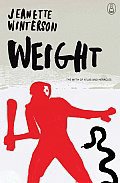
Weight: the Myth of Atlas and Heracles

by Jeanette Winterson

The publisher Canongate has begun a new book series,
The Myths, asking contemporary authors to retell ancient mythological stories. Among the first volumes published in the Myths series is Weight: the Myth of Atlas and Heracles by Jeanette Winterson. It's a short book - some 150 pages - with a heavy topic.

Winterson tells the story of Heracles: his godly father Zeus, his mortal mother Alcmene, the wrath of Zeus's consort Hera, the divinely provoked insanity that causes Heracles to kill his wife and children, and the twelve impossible tasks he must do to atone for the murder of his family.

To complete the eleventh task, Heracles must travel to the end of the world and steal the Apples of Hesperades from a fruit tree belonging to his enemy, Hera. He arrives to find that the apples are guarded by Ladon, a hundred-headed snake, and he enlists the help of Atlas, a Titan commissioned with the task of shouldering the world.

Though the story is a timeless one, Winterson gives her characters modern psychologies. In their quest for the Apples of Hesperides, Heracles and Atlas come to consider the paths that their lives have taken:

Which is what [Heracles] said to Atlas when they ate together under a wedge of stars.
"Why are we doing this, mate?"
"Doing what?"
"You're holding up the Kosmos and I'm spending twelve years clobbering snakes and theiving fruit. The only good time was chasing Hippolyte, Queen of the Amazons, and she didn't want anything to do with me when I caught her...."
"What happened to Hippolyte?"
"I killed her of course."
"I knew her once."
"Sorry mate."
There was a pause. Atlas was silent. Heracles drank another skinful of wine. He didn't want to think. Thinking was like a hornet. It was outside his head buzzing at him.
"What I mean to say, Atlas, is why?"
"There is no why," said Atlas.
"That's just the trouble," said Heracles.
"There is why, here, or here, or here," and he started hitting the side of his head, trying to squash the droning thought.
Atlas said -
"Bent under the world like this, I hear all the business of men, and the more I hear them questioning their lot, the more I know how futile it is. I hear them plan for tomorrow and die during the night. I hear a woman groaning in labor and her child is stillborn. I hear the terror of the captured man, and suddenly he is set free. I hear a merchangt traveling home from the coast with all his goods, and robbers set upon him and take all he has. There is no why. There is only the will of the gods and a man's fate."
"I'm the strongest man in the world," said Heracles.
"Except for me," said Atlas.
"And I'm not free...."
"There is no such thing as freedom," said Atlas. "Freedom is a country that does not exist."
"It's home," said Heracles. "If home is where you want to be."
Winterson's version of the Atlas and Heracles story is chock-full of such witty and probing passages. Her mythological superheroes find ways to liberate both mind and body from the tasks that life has given to them. In this way, the story becomes a modern one, full of questions about why we do the things we do.

Labels: ,

The Thieves of Ostia

If you are trying to find a book that will grab the imagination of your 8, 9, 10 or 11 year old, then the Roman Mystery Series is your answer.

The Thieves of Ostia, by Caroline Lawrence, is the first book her still-growing series, Roman Mysteries. The story takes place in Ostia, ancient Rome’s port (and a place you can still visit today), where Flavia Gemina, daughter of a sea captain; her neighbor, Jonathan; Lupus, a young beggar; and Nubia, an African slave solve the mystery of a slain dog.

The book is fast-paced with lots of action and adventure: Flavia and her companions are chased by a pack of wild dogs, they narrowly escape malicious slave traders, and they discover that their chief suspect has committed suicide by jumping from a lighthouse. It’s enough to keep any young reader turning the pages.

But the book also gives a great overview of daily life in an ancient Roman city with its descriptions of architecture, politics, religion, slave trading, and economics. And, it’s the perfect book to give a young traveler headed to Rome or one who’s already been to the Eterna. Even better, if you’re travelling to Rome with grade-school age children in tow, read them the book and then plan a trip to Ostia Antica - it’s easy to get to by public transportation - so they can see just where Flavia Gemina and her friends lived.

Labels: , ,

Hadrian's Empire

Though at first glance this book seems as if it would provide history and analysis of Rome’s great emperor, Hadrian, that’s not the case at all. Rather, Danny Danzinger and Nicholas Purcell have teamed up to produce a book that provides a broad overview of the Roman Empire in the second century AD, under the rule of Hadrian.

Though Hadrian himself does receive a signficiant amount of attention in the book, the authors of Hadrian's Empire most often use aspects of Hadrian's life as stepping-off points for the exploration of broader themes. Thus, there are chapters that cover topics such as the workings of the Roman city, the administration of the Roman Empire, the military, politics, religion, social life, attitudes towards sex, houses and apartments, food, clothing, class differences, and women's role in society.

If you're the kind of person who spends your time in the Roman Forum wishing you knew more about how Romans lived, worked, and played, then this book will satisfy some of your longings, for it will leave you with a much-expanded idea of what life was like in the ancient Roman world.

Labels: , ,

The Colosseum

In the year 1999, the movie Gladiator reminded millions of people just how spectacular a place Rome’s Colosseum is. It had been decades since the last swords and sandals flick, but Russell Crowe, in the role of a fictional gladiator, Maximus, dramatically won our hearts.

Yet, one wonders. Did it really happen that way? Did the movie provide an accurate portrayal of the gladiatorial games? And was its computer-generated rendition of the Colosseum worth the time (and money) it took to produce it? Now you can judge for yourself.

Classical scholars Keith Hopkins and Mary Beard have just published a pocket-sized history of the Colosseum and the spectacles it hosted. This is a book that shouldn’t be missed by anyone who has found themselves standing in the Colosseum and trying to imagine what it was like to attend the gladiatorial games. Nor should the book be overlooked by those who have shivered with horror when thinking of the carnage and violence that took place in the largest amphitheater in the Roman world.

Beard and Hopkins write for a general audience and their book addresses many aspects of the gladiatorial games and the Colosseum itself. They have chapters that examine the staging of the games, the building of the Colosseum, the careers of gladiators, the social rituals of which the gladiatorial games were a part, and the uncanny attraction that generations of travelers have had to this monument.

Far from dry, this book is an enjoyable and quick read - the perfect length for the plane ride to Rome. “We who are about to die, salute this lovely little book!”

Labels: , ,

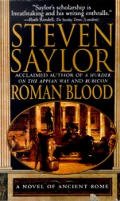
Roman Blood: A Novel of Ancient Rome

Enjoying HBO’s new Rome series? Then you’ll want to read Steven Saylor’s books too.

Many of us find it easier to get a handle on complex historical eras by approaching them first through fiction and later tackling the labyrinth of historical facts. If that’s your preferred approach, then Steven Saylor’s Rome Sub Rosa series is made to order.

Saylor’s mystery novels are set in the 1C BC and they star Gordianus the Finder as a Roman “detective” with a nose for truth and an uncanny ability to find himself in unusual predicaments. Roman Blood, the first of the ten books in the series, throws Gordianus into cahoots with the young Cicero and takes the reader deep into the political, legal and family arenas of ancient Rome. Rome’s hottest new lawyer, Cicero, is faced with defending a wealthy farmer accused of killing his father. Cicero hires Gordianus to discover what really happened and Saylor gives a lively rendition of Sextus’s trial including Cicero’s defense speech.

Gordianus’s work on the case will win him acclaim and through the course of Saylor’s next nine books, his status in life will rise as he moves from a middle class house on the Esquiline Hill to a noble abode on the Palatine. His adventures will become ever-more exciting too - in subsequent books Gordianus interacts with Rome’s major movers and shakers, including Pompey the Great and Caesar.

Labels: , ,