Saturday, July 15, 2006

Basilica. The Splendor and the Scandal: Building St. Peter's
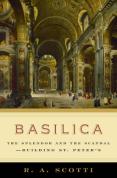

After his election to the Papal throne in 1503, Pope Julius II made a radical decision. He decided to tear down and to rebuild the 1200 year old basilica that stood atop the grave of St. Peter in Rome. Julius ordered his favored architect, Bramante, to design a glorious new church, one which would e a reflection of the Rome's power as the center of the Christian church, and one which would be large enough and grand enough to rival the ancient ruins that littered the city of Rome.

The ambitious project proceeded rapidly. In April of 1506, an elderly but fiesty Julius climbed into the foundation trench of the projected church and deposited there his own medallions - testimony to his role as instigator of the supersized project. Little did Julius know that it would be a century and a half before new St. Peter's was completed, and that in the meantime, the problem of funding the Basilica would provoke the Protestant Reformation, threatening the power of the Roman Church.

In a book that reads like a nonfiction novel, R.A. Scotti recounts this longest of building projects. On the pages of Basilica, historical characters, from Bramante to Bernini and from Pope Julius II to Pope Alexander VII spring to life. The excitement of the new project, the scandalous amount of money spent on the church, and the complications faced by its engineers are but a few of the sub-themes that run throughout the pages of this fascinating work.

Labels: , , ,

Thursday, February 09, 2006

Return to Glory

Darkened by centuries of grime and soot, Michelangelo’s paintings in the Sistine Chapel were cleaned in a painstaking process that began in the 1979 and lasted thirteen years - three times longer than it took Michelangleo to paint the ceiling. This 50-minute video documents the laborious cleaning process that brought Michelangelo’s frescoes back to their original glory.

If you’ve ever been curious about the process of restoration - its complications and complexities - than Return to Glory is for you. It provides a close-up look at the processes that were used by art conservators as they sponge-bathed each and every massive figure on the Sistine Ceiling. And it documents exciting discoveries made in the process. Splendidly colored figures formerly hidden by layers of dirt and grime emerge before your eyes.


Likewise, if it’s Michelangelo’s amazing capacity to render the human body that interests you, than this is a documentary film that you won’t want to miss. You can’t get this close to the Sistine Ceiling in a visit to the Vatican Museums, and you can’t begin to see the details that this video highlights - including a figure that bears Michelangelo’s hand print!


Return to Glory
is currently out of print, but you’ll find copies in many public and university libraries. And, with a careful search, you’ll discover that there are some used copies floating around the internet.


Nippon Television Network Corporation, 1996. Distributed by CCC of America, Inc.

Labels: , , ,

Michelangelo's Mountain

Here’s a brand new book that aims to give us the inside view on Michelangelo and his quest for artistic perfection - but this is not a book about the Sistine Chapel ceiling or the Pieta. Rather this book details Michelangelo’s quests for perfect blocks of marble in the quarries of Carrara in Northern Italy. Author Eric Scigliano presents a vivid picture of Michelangelo’s escapades and ordeals in the quarries that produced the marble from which the artist carved every single statue that he ever created.

Michelangelo’s repeated trips to Cararra - some lasting as long as eight months - gave him intimate knowledge of its mountain of marble. He spent his time there choosing the perfect blocks of statuario - marble fit for carving statuary - and supervising their quarrying and their transport to distant locales like Florence and Rome.

In writing this book, Scigliano shows his reader just how difficult and complex the task of quarrying marble was in the Renaissance, and he also demonstrates the extraordinary effort needed to produce the perfect block of marble.

Fortunately this book is not just about the quarries. It also covers the subject of Michelangelo’s scultpural work, with chapters discussing some of the artist’s greatest hits, like the David and the Pieta. Equally spellbinding are Scigliano’s descriptions of the enormous social and political challenges Michelangelo faced throughout his career, and his often troubled relationships with popes, princes, and poets.

Labels: , ,

Michelangelo and the Pope's Ceiling

By now, Ross King’s blockbuster book, Michelangelo and the Pope’s Ceiling, is well known to many lovers of art and Rome-antics. But, just in case you’ve missed it, we want to remind you that it’s out there and that it’s well worth your time. It provides an excellent and enjoyable overview of the immense task undertaken by Michelangelo when he was commissioned to paint the Sistine Chapel ceiling by Pope Julius II.

It wasn’t Michelangelo’s first encounter with the formidable pontiff. Julius II had already asked Michelangelo to create a colossal tomb for him, then cancelled the project, an act that angered Michelangelo and made him swear never again to work for Julius. It was a promise that couldn’t be kept, however, for in 1508 Julius summoned Michelangelo to Rome and set him on the task of painting the Sistine Ceiling.

As King points out, Michelangelo was perhaps not the most logical choice for this project. His experience as a painter was limited, yet he was to produce a masterpiece that still attracts enormous crowds almost 500 years after its completion. The process by which the ceiling came into being is the subject of King’s book, but
it’s hardly a straight forward art history.

Rather, Michelangelo and the Pope’s Ceiling should be considered to be a history of the Papal Court and its artists, for King aims to give his reader a complete picture of the social context in which Michelangelo worked. As a result, we learn much about the relationship between Michelangelo and the Pope; about the interactions between Michelangelo and the other superstar artists, like Raphael, working for Julius II; about the techniques and processes used by Michelangelo to paint the ceiling; and about the complex relationship that Michelangelo maintained with his family in Florence.

Labels: , ,

Tuesday, November 22, 2005

The Families Who Made Rome

Anthony Majanlahti’s book, The Families Who Made Rome: A History and a Guide is simultaneously a social history of Rome’s most noble families and a guidebook that allows you to see Rome in a whole new way. If you’ve ever wandered from Palazzo Barberini to Piazza Colonna or from the Villa Borghese to the Palazzo Medici and wondered who built all these grand palaces, piazzas, and gardens, then this book is for you!

The book begins with an introduction to the “Broken City,” the Rome created by the long Middle Ages, when power struggles and financial woes took their toll on the city that had once been the capital of the Roman Empire. From there, Majanlahti sets out to show us how the magnificent Rome we experience today came into being and he places much of the responsibility for the rejuvination of the city in the hands of its most noble residents - families such as the Colonna, the Della Rovere, the Farnese, the Borghese, and the Barberini.

The book is divided into chapters that focus on the architectural and artistic achievements of a particular family. These chapters make great reading for the armchair traveler, but also serve as an interesting guide for visitors to Rome.

Labels: , , , ,

Monday, November 21, 2005

The Pope's Daughter: the Extraordinary Life of Felice della Rovere

Everyone at the IDC is talking about Caroline Murphy’s book, The Pope’s Daughter: The Extraordinary Life of Felice Della Rovere.

The book chronicles the life of Felice, daugher of Pope Julius II who reigned from 1503-1513. Felice began her life as the illegitimate daughter of Pope-to-be Giuliano della Rovere and a Roman noblewoman, Lucrezia Normanni, in 1483. When Felice was 20 years old, her father was elected to the Papal throne and became Rome’s most powerful Renaissance Pope and an exemplary patron of art. In his decade-long reign, he hired Michelangelo to paint the Sistine Chapel Ceiling, asked Rapahel to paint his private apartments in the Vatican Palace, and commissioned Bramante to design the new St. Peter’s Basilica.

Julius was a formidable man, known for his terribilita, and his daughter Felice inherited much of his political-savvy and determination. Her Papal father married her to a Roman noble of the Orsini family, insuring her an aristocratic standing in Roman society, and she used her status to better her own position in the world and that of her father. As Pope, her father regularly called upon her to negotiate diplomatic agreements about issues that could not properly receive direct Papal attention. And concern with her family legacy led Felice to build a financial empire of her own, making her among the richest and most powerful women on the Italian peninsula.

Not suprisingly, Felice moved in the privileged circles of Italian society, and her biography is a star-studded one, showcasing her interactions with such individuals as Michelangelo, Isabella d’Este, Lucrezia Borgia, and Catherine de Medici.

Besides giving a fascinating account of the life of Felice della Rovere, Murphy’s book demonstrates the extreme creativity of the period in which she lived. Surrounded by humanistic invention of every type - artistic, literary, philosophical, and scientific - Felice took the task of self-fashioning to new heights, gaining levels of power and freedom that were extraordinary for a Renaissance woman.


Labels: , ,